Today's Overview
Saturday brought three distinct currents through the tech landscape, and they're pulling in opposite directions. On one side: engineering getting more accessible. On the other: the infrastructure to power it all is becoming a battleground.
The Motor Problem Gets Solved
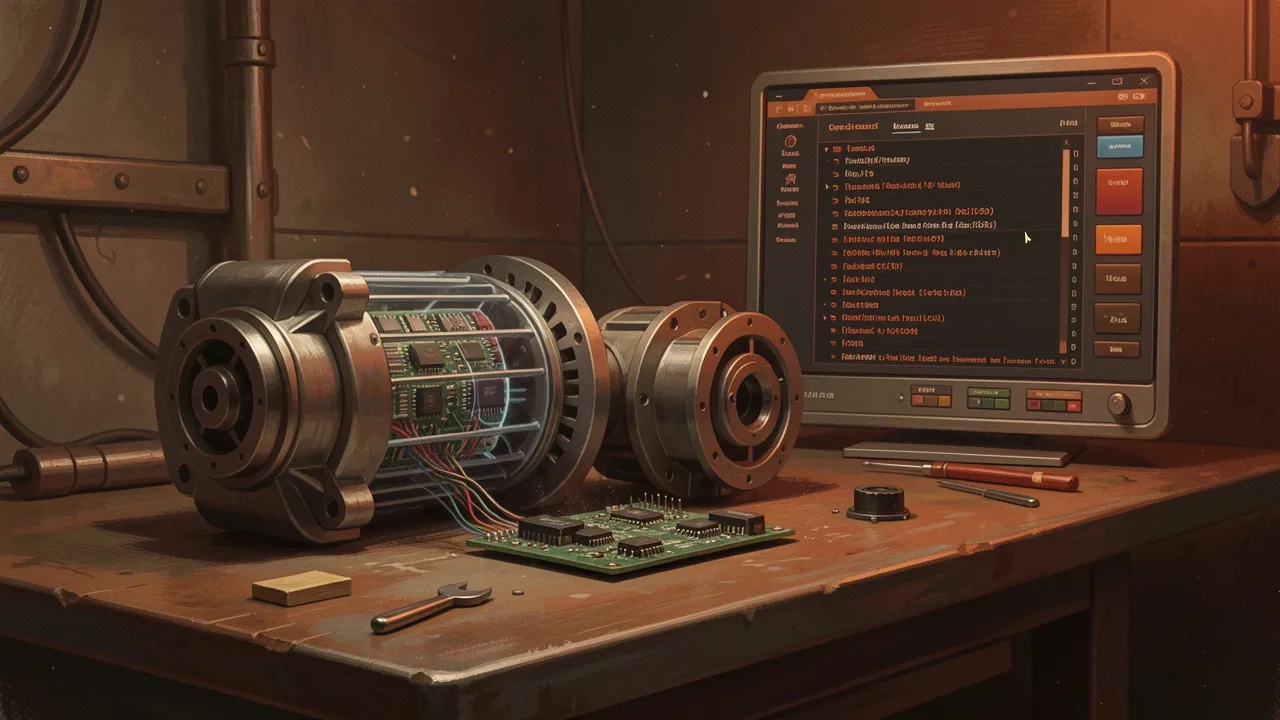
The Unitree Go2 quadruped costs a fraction of what comparable robots did five years ago. The trick is the motors-compact, capable, and proprietary. Thomas Flayols just reverse-engineered them. Using X-rays and some methodical sleuthing, he extracted the firmware key from the bootloader, cracked the encryption, and is building an open-source replacement. This is the kind of work that transforms a locked product into a platform. The motors weren't the bottleneck before; they are now the opportunity. Once the firmware is open, these actuators work anywhere. That changes what a builder can do in an afternoon.
ROS 2 Lyrical Luth shipped this week. The robotics ecosystem keeps Going ahead-more packages, better tooling, clearer paths from simulation to hardware. The Robotics Summit kicks off next week in Boston with talks on open foundations and AI-powered robots. Brian Gerkey from Open Robotics will discuss how open-source is becoming non-negotiable in the age of physical AI. The pattern is clear: robotics is becoming a field where the best work happens in the open.
Agents Are Learning to Improve Themselves
Princeton researchers demonstrated something that should make you sit with it for a moment: Continual Harness-an AI agent that learns and adapts while it's running, without resets. In their tests with Pokémon, the agent built its own helper tools, stored and refined strategies, and improved continuously. The same principle scales. Agents that don't start over every session, that carry memory forward, that can modify their own instructions-this is the infrastructure for agents that actually get better at what they're doing. That's not an academic curiosity. That's the difference between a tool and something that compounds.
Why People Are Angry About Power
Anthropic will hit profitability this quarter-two years ahead of schedule. OpenAI's preparing an IPO. Google threw ten types of AI at the wall at I/O. But Azeem Azhar noticed something else: the backlash is growing as fast as revenues. Eric Schmidt got booed at a college commencement. A student said she'd throw AI away if it doesn't come to her in a human way. Someone brought a jar of muddy water from their tap to a hearing-that's what Meta's data center left them with. The issue isn't the technology itself. It's the gap between the promises (solving humanity's problems, exploring the galaxy) and the reality (construction noise, water-quality issues, jobs that don't need as many humans anymore). When someone can point at a physical thing and say "this is what your technology cost me," the grand narrative stops working. Data centers need to be built. The grid needs to upgrade. But understanding why people have a veto now-that matters more than winning the argument.
The robotics work is unlocking new possibilities. The agent research is showing what's next. The backlash is showing what needs to happen first. None of these stories exist alone.